
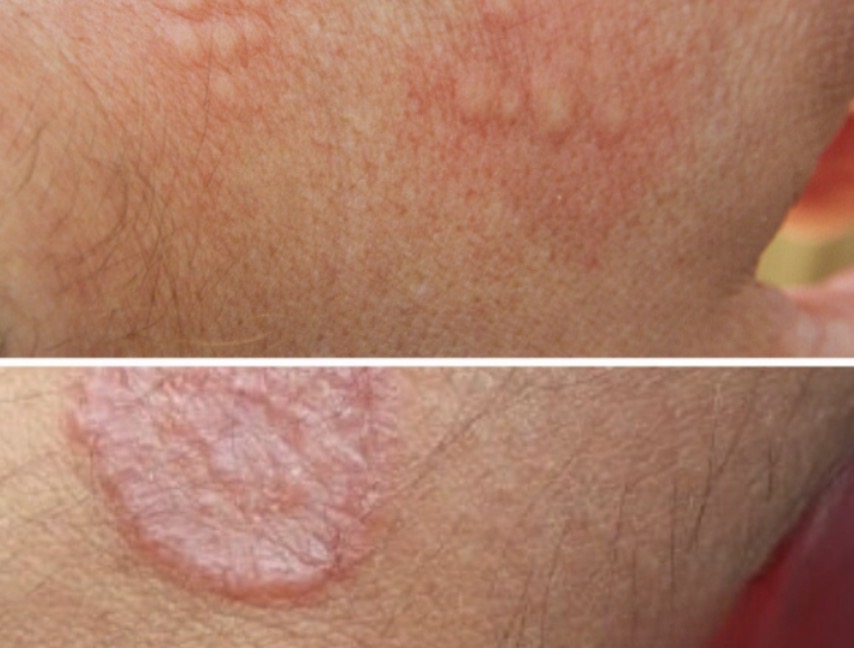
It seems like you’re asking about groin skin irritation, but the image provided shows a case of skin irritation or contact dermatitis, likely caused by friction or an allergic reaction. The conditions in the image appear as circular, raised red spots with a ring-like pattern, which could suggest a variety of irritants, such as:
- Friction from tight clothing or jewelry (like watches or wristbands)
- Heat rashes or sweat-induced irritation
- Allergic reactions to soaps, lotions, or other products
When it comes to groin skin irritation specifically, similar causes can lead to discomfort. Here’s an overview of common causes, symptoms, and gentle care tips for groin irritation:
Causes of Groin Skin Irritation:
- Friction: Tight clothing, athletic activities, or sitting for long periods can cause chafing.
- Heat Rash: Sweating in the groin area can clog sweat glands, causing rashes and irritation.
- Infections: Fungal infections like jock itch (Tinea cruris) can lead to red, ring-shaped rashes.
- Allergic Reactions: Irritation from soaps, lotions, or even certain fabrics can trigger allergic dermatitis.
- Poor Hygiene: Accumulation of sweat and bacteria in the groin area can lead to rashes.
Symptoms:
- Redness and irritation
- Itching or burning sensation
- Raised bumps or rashes, often in ring shapes
- In more severe cases, blisters or oozing may develop
Gentle Care and Treatment:
- Keep the area clean and dry: After washing with mild soap and water, dry the area gently to prevent moisture buildup.
- Use anti-chafing products: These can reduce friction and prevent further irritation.
- Wear loose, breathable clothing: Avoid tight clothes or synthetic fabrics. Cotton is an excellent option to let the skin breathe.
- Apply soothing creams: Hydrocortisone or calamine lotion can reduce inflammation. If the irritation is fungal, an over-the-counter antifungal cream might be needed.
- Avoid allergens: If you suspect a reaction to products like soaps or detergents, switch to hypoallergenic options.
When to See a Doctor:
- If the irritation worsens or doesn’t improve within a few days.
- If the skin becomes swollen, painful, or shows signs of infection like pus or fever.
- If there are recurrent episodes of irritation, which could suggest an underlying condition like eczema or fungal infections.
Taking care of your skin by using gentle, non-irritating products and making lifestyle adjustments (such as wearing looser clothes) can significantly help with managing and preventing groin irritation.