
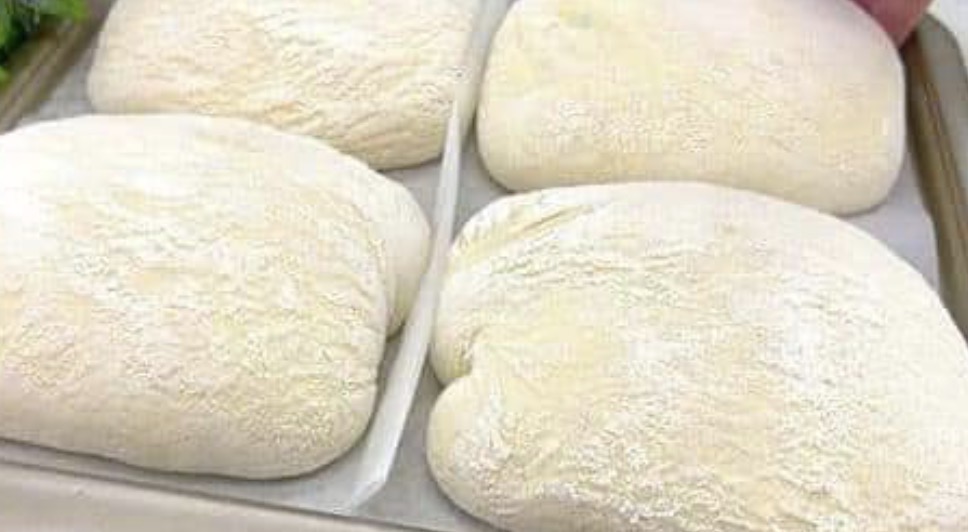
Ingredients:
- 500g (4 cups) all-purpose flour (you can also use bread flour for a chewier texture)
- 10g (2 tsp) salt
- 1g (1/4 tsp) instant yeast
- 400ml (1 2/3 cups) lukewarm water
- 2 tbsp olive oil (optional, for extra flavor)
- 200g (1 cup) active starter or biga (for the pre-ferment, if desired)
Instructions:
1.
Make the Dough:
- In a large mixing bowl, combine the flour, salt, and instant yeast.
- Gradually add the lukewarm water while mixing with a wooden spoon or your hand until you have a rough, sticky dough.
- If you’re using a starter or biga (pre-ferment), mix it in at this stage.
- Add olive oil if using, and continue mixing until it’s incorporated.
2.
Kneading:
- The dough will be quite sticky, so you may not need to knead it much.
- Instead, use the “stretch and fold” method: Stretch one edge of the dough, fold it over itself, then rotate the bowl and repeat for about 5-10 minutes.
- Alternatively, if you have a stand mixer, use the dough hook on a low speed for 5-7 minutes until the dough is smooth and elastic.
3.
First Rise (Bulk Fermentation):
- Once the dough has been kneaded, cover the bowl with a damp cloth or plastic wrap.
- Allow the dough to rise at room temperature for 1.5 to 2 hours, or until it has doubled in size.
- During the first hour of rising, you can perform a few more sets of “stretch and folds” every 20 minutes to strengthen the dough.
4.
Shaping:
- Once the dough has risen, gently turn it out onto a well-floured surface.
- Do not punch down the dough—handle it gently to preserve the air bubbles that form during fermentation.
- Divide the dough into two portions (for two loaves).
- Shape each portion into a rustic, oval shape, stretching and folding gently as you go. Be careful not to overwork it.
- Dust a baking sheet or pizza stone with flour and place the dough onto it. If you have a couche (a linen cloth used for proofing), you can use it to support the dough’s shape.
5.
Second Rise:
- Let the dough rest and rise for about 45 minutes to 1 hour. The dough should puff up a little but not double in size like during the first rise.
6.
Baking:
- Preheat the oven to 220°C (425°F). If you have a pizza stone, place it in the oven while it preheats.
- Once preheated, place the dough on the stone or baking sheet.
- To create steam in the oven, place a pan of water on the bottom rack of the oven (or spritz the oven with water using a spray bottle just before baking).
- Bake for 25-30 minutes, or until the bread is golden brown and sounds hollow when tapped on the bottom.
7.
Cooling:
- Remove the bread from the oven and allow it to cool on a wire rack for at least 30 minutes before slicing. This helps set the crumb and develop flavor.
Enjoy your homemade Ciabatta with some olive oil, cheese, or as a sandwich base!